

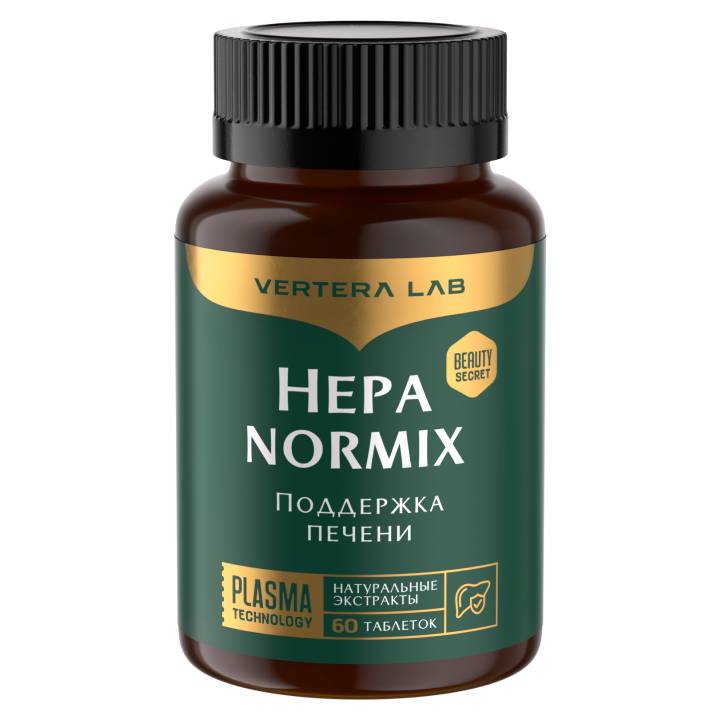
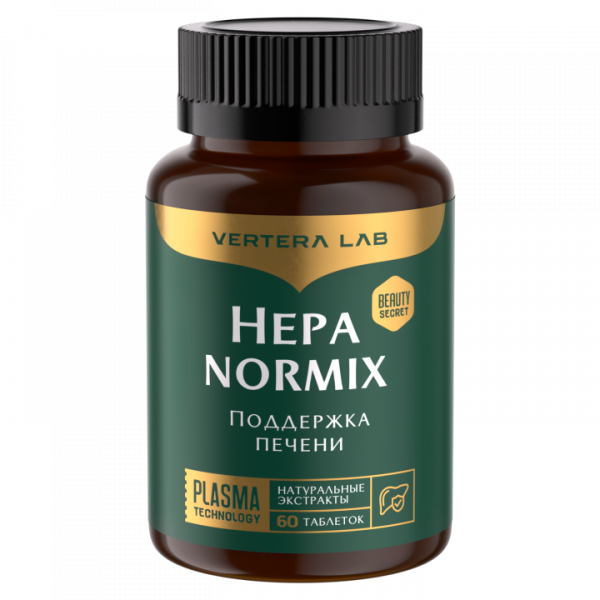
Hepanormix
Complex for normalizing liver function.
- Gentle cleansing
- Support of natural elimination processes
- Lightness
- Digestive comfort
- Gentle cleansing
- GI balance
- Inner balance
- Digestive environment
- Microbiota support
Hepanormix (Vertera Beauty Secret) consists of natural, plant extracts with specific action. The result is achieved by normalizing the functioning of the mechanisms of the body’s biological self-regulation systems.
The basis of Beauty Secret a combination of the work of biogel from brown seaweed Plasma homeofood and medical extracts of herbs, plants, fruits.
Hepanormix (Vertera Beauty Secret) complex for:
- Liver cleansing and detoxification
Extracts of fennel fruit, holy thistle seed, artichoke leaf and dandelion root help effectively cleanse the liver of toxins, improving its functioning.
- Digestive Support
Celery leaf powder and Jerusalem artichoke powder help improve digestion and make it easier for the liver to process food.
- Stimulating bile flow
Extracts of artichoke, nettle, licorice, dandelion and calamus stimulate the production and flow of bile, which helps normalize the functioning of the liver and gallbladder.
- Anti-inflammatory action
Nettle and licorice root extracts have anti-inflammatory properties, helping to soothe inflammation and improve general liver health.
- Protects liver cells
The active components of sea buckthorn protect liver cells from free radical damage, promoting their repair and protection.
- Is enriched with vitamins and minerals
Lyophilized gel from brown kelp and fucus seaweed "PLASMA" enriches the complex with vitamins and minerals, strengthening immunity and supporting the general liver health.
"Smile with your lips, your face, smile with your thoughts and smile even with your liver!" (c)
Fennel fruit extract, celery leaf powder, holy thistle seed extract, Jerusalem artichoke tuber powder, artichoke leaf extract, nettle root extract, licorice root extract, dandelion root extract, sweet calamus rhizome extract, sea buckthorn leaf extract, lyophilized (sublimated) laminaria and fucus brown seaweed gel "PLASMA".
Source of flavolignans (silymarin), flavonoids (in terms of rutin), glycyrrhizic acid.
Active ingredients
*Click on the card to learn more about the component
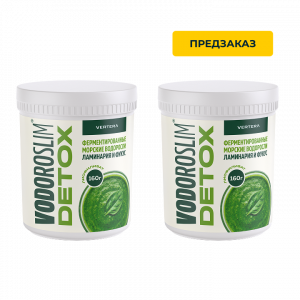
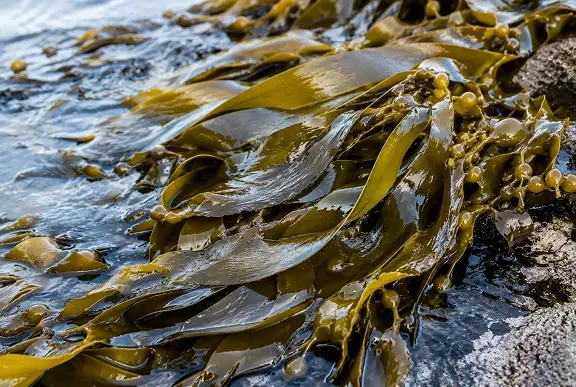
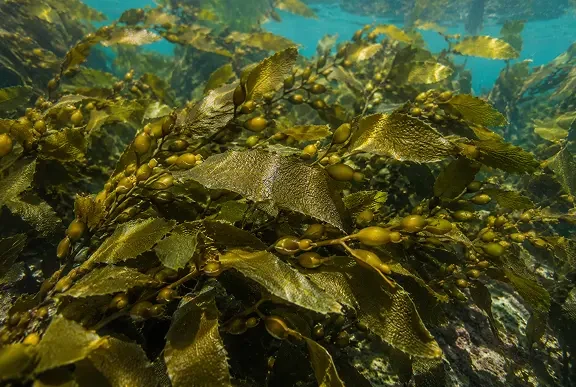
The living energy of the ocean for your health Laminaria is not just a seaweed. It is an ancient organism that has spent millions of years perfecting survival mechanisms in a harsh environment. It has absorbed the best the ocean has to offer: 23 minerals in ionic form, 18 vitamins, 9 essential amino acids, and rare polysaccharides not found in terrestrial plants. Its greatest gift is alginates. These natural sponges gently bind and remove toxins, heavy metal salts, and radionuclides without disrupting the microflora. Iodine in organic form supports the thyroid gland. Laminaria's antioxidants quench oxidative stress, slowing down cellular aging. And its polysaccharides awaken the immune system, helping to fight off viruses and bacteria.
The tamer of inflammation and guardian of your blood vessels Fucus is a brown seaweed that grows in the harsh intertidal zone. To survive in extreme conditions, it created a unique molecule — fucoidan. This polysaccharide is now recognized as one of the most powerful natural immunomodulators. Fucoidan activates natural killer cells (NK cells), making the immune system work like a Swiss watch. It also reduces blood viscosity, strengthens vascular walls, and prevents blood clot formation. The second secret of fucus is iodine in an easily absorbable form that supports the thyroid gland, while its alginates, just like those of laminaria, gently remove toxins.
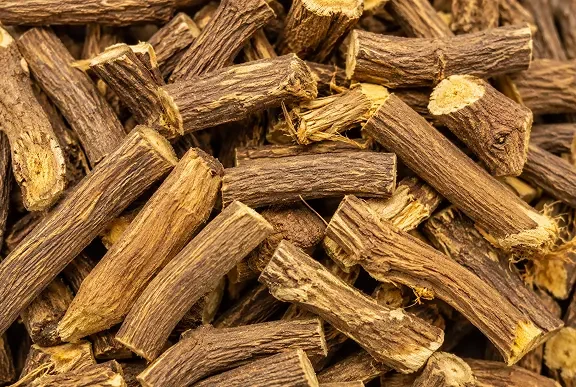
The root that knows how to soothe Licorice is one of the most ancient plants in medicine. Today, science has confirmed: it works where others fail. The heart of the formula is glycyrrhizic acid. It is a natural anti-inflammatory agent that acts like mild cortisone but without side effects. Redness fades. Irritation disappears. Skin breathes. Licorice protects against viruses. It suppresses their replication, helping the immune system fight off attacks faster and more easily. For stomach care, licorice coats the mucous membrane, relieves heartburn, and soothes gastritis. And most importantly: it enhances the effect of all surrounding components. Synergy that transforms a set of ingredients into a system.
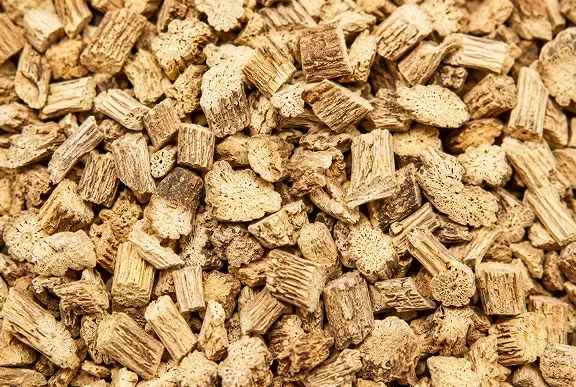
The root that cleanses from within Sweet flag is a plant with character. Its root has been used for centuries to cleanse the body. The main strength of sweet flag lies in its bitters and essential oils. They stimulate the production of gastric juice and bile, kickstarting digestion from the very first spoonful. Post-meal heaviness disappears. Gastritis quiets down. Bloating vanishes. But sweet flag works deeper. It gently cleanses the intestines of putrefactive bacteria without killing beneficial flora. It eliminates bad breath, treats stomatitis and gingivitis. Its choleretic effect helps the liver process fats without overload. Sweet flag is internal hygiene. It doesn't fight symptoms. It eliminates stagnation and decay where they begin.
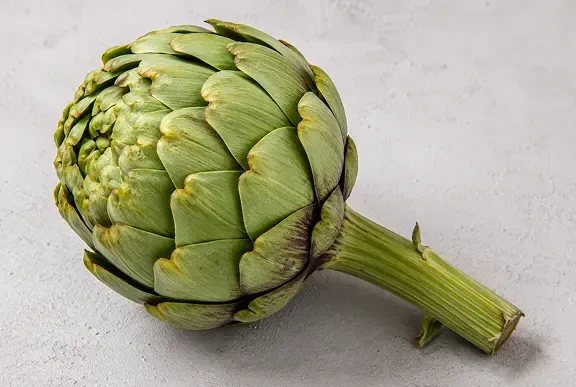
The green guardian of your liver Artichoke is one of the most studied hepatoprotectors. Its key compound is cynarin. It stimulates bile flow, helping the liver process fats without becoming overloaded. After a heavy meal, there's no heaviness or bitter taste. Cynarin lowers "bad" cholesterol while raising "good" cholesterol. The liver gets support, and blood vessels get protection from atherosclerosis. Artichoke neutralizes free radicals, slowing the aging of liver cells. This is important when taking medications, consuming alcohol, or living in a city. Artichoke doesn't treat the liver. It restores its ability to cleanse itself. Without chemicals or side effects. FOUND IN PRODUCTS
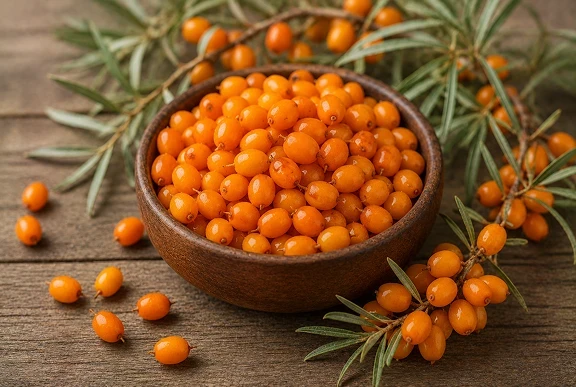
A berry that heals from within Sea buckthorn is a record holder in carotenoid and tocopherol content. But the key feature is the rare omega-7 (palmitoleic acid). Omega-7 restores the mucous membranes of the stomach, intestines, oral cavity, and urogenital tract. For gastritis, ulcers, colitis, and cystitis, it accelerates healing without irritation. For the skin, sea buckthorn works from within: it reduces inflammation, moisturizes, and slows aging. For blood vessels, it lowers cholesterol and strengthens vessel walls. Sea buckthorn is more than just vitamins. It's a repair kit for mucous membranes. Which suffer first. And recover last.
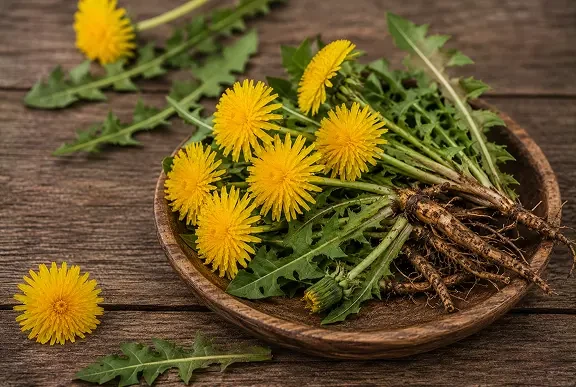
The bitterness that awakens the liver Dandelion is a weed only to gardeners. To a nutritionist, it's one of the best hepatoprotectors. Dandelion root contains bitter compounds (taraxacin, taraxacerin) that stimulate bile production. The liver gets the signal: work harder. Fats stop stagnating, cholesterol drops, and that heavy feeling after meals goes away. At the same time, dandelion acts as a mild diuretic. It removes excess fluid without potassium loss (unlike synthetic diuretics). Swelling subsides, blood pressure normalizes. Dandelion is bitter. But this bitterness restores order in the hepatobiliary system. Without chemicals. Without side effects.
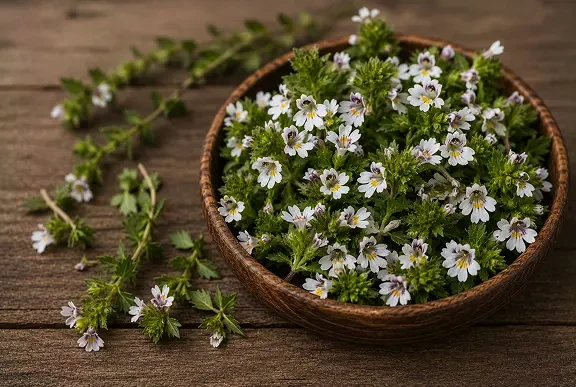
The herb that sees everything Eyebright is a plant with a telling name. It has been used for centuries for eye conditions. Eyebright contains iridoids, flavonoids, and tannins. They reduce inflammation, moisturize the eye mucosa, and relieve fatigue after long hours of screen work. For conjunctivitis, blepharitis, and dry eye, eyebright restores comfort. But its strength lies in its gentleness. Eyebright doesn't dry, doesn't sting, and doesn't dilate the pupils. It simply helps the eyes stay clean, moist, and sharp. Eyebright is not a cure for nearsightedness. It protects what you have. So your vision doesn't decline before its time.
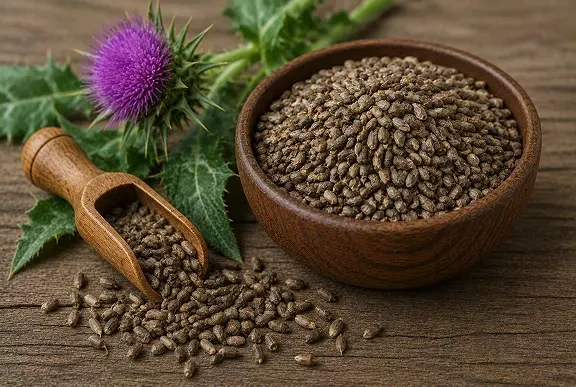
The gold standard of over-the-counter hepatoprotection Milk thistle is a plant whose power lies in silymarin. It's a complex of flavonolignans that protects hepatocytes from toxins, stimulates protein synthesis, and accelerates liver regeneration. In cases of fatty liver disease, hepatitis, cirrhosis, and after chemotherapy or antibiotic courses, milk thistle lowers liver enzyme levels (ALT, AST), reduces inflammation, and restores detoxification function. Milk thistle is not a cure-all. But no one has come up with a better natural hepatoprotector yet.
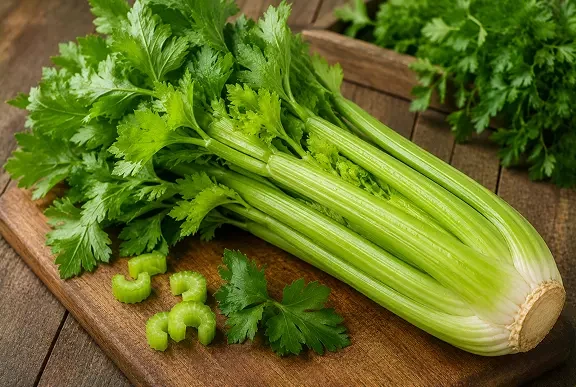
A crunchy diuretic with a gentle touch Celery is a green that has been used for centuries to purify the blood and remove excess fluid. Flavonoids (apigenin, luteolin) and phthalides gently stimulate urine flow, lower blood pressure, and reduce swelling. Unlike synthetic diuretics, celery doesn't flush out potassium. For joints, celery provides anti-inflammatory support. Morning stiffness fades, pain decreases. Celery isn't a hero. But in formulas for the heart, blood vessels, and joints, it works quietly and reliably. No fuss. No side effects.
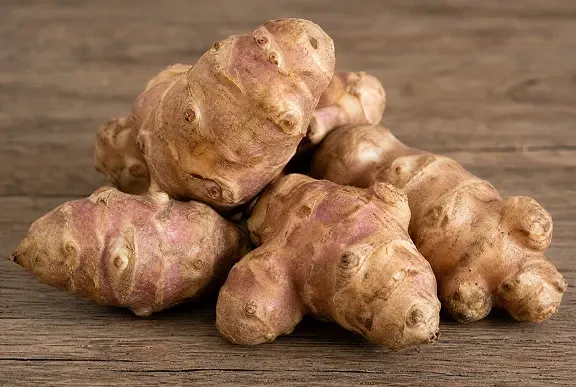
A root that teaches your liver to rest Jerusalem artichoke is not a famous name. But in the world of hepatoprotectors, it knows what others have forgotten: how to make bile flow without strain. Inulin is its main tool. It gently but persistently stimulates bile outflow. The liver stops suffocating under the weight of fats and toxins. The bitter taste in your mouth disappears on its own. The heaviness after eating — gone too. At the same time, inulin feeds your microflora. The very one that suffers during any stagnation. Jerusalem artichoke doesn't rescue. It restores the liver's ability to breathe. And quietly steps into the shadows. As befits someone who solves problems without drawing attention.
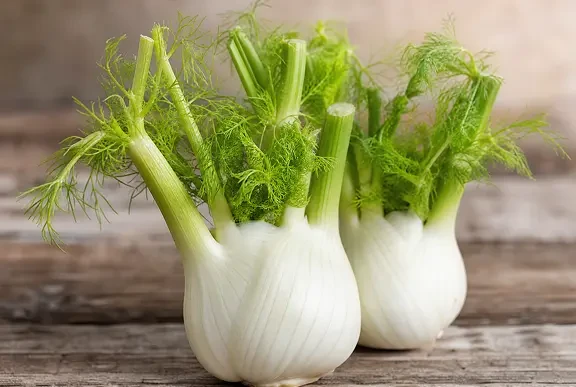
An anise smile for your bile Fennel smells like childhood. But its character is all grown up. Essential oils — anethole, fenchone — relax the bile ducts so smoothly you don't even notice. Bile doesn't stagnate, doesn't press, doesn't remind you of itself with pain. It simply starts to flow. Smoothly. Like a river after winter. At the same time, fennel quells gas and bloating. Your belly stops being a drum. Fennel doesn't fight the liver. It negotiates. Gently, with respect, with a smile. And you simply feel lightness where there used to be heaviness.
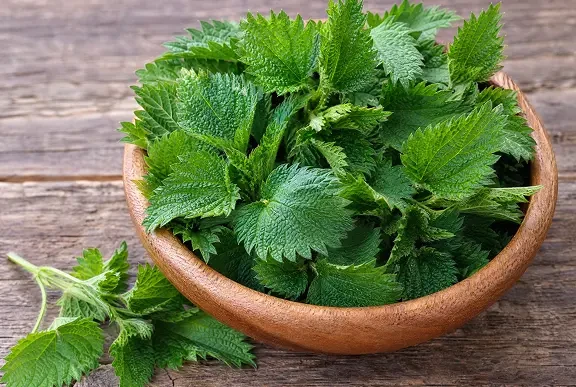
A tough herb with a gentle power Nettle doesn't forgive carelessness. But its gift is the ability to restore what others ignore. Its leaves contain chlorophyll, silicon, iron, and flavonoids. Nettle gently stimulates bile flow — the liver stops accumulating toxins, heaviness after meals fades. Silicon participates in collagen synthesis: ligaments become more elastic, bones denser. Iron and chlorophyll raise hemoglobin, eliminating chronic fatigue. Nettle doesn't choose who to help. It works wherever there's stagnation. In the liver, in the blood vessels, in the blood. Tough. But fair.
Frequently asked questions
Still have questions?
Did not find an answer? Contact our support team: support@vertera.org
We use cookies. By using the website, you agree to our Privacy Policy for the purpose of collecting analytics and ensuring the proper functioning of the website. You can disable cookies at any time in your browser settings.